Why Smaller Senior Care Residence Make Assisted Living Feel Like Home
Business Name: BeeHive Homes of Lamesa TX
Address: 101 N 27th St, Lamesa, TX 79331
Phone: (806) 452-5883
BeeHive Homes of Lamesa
Beehive Homes of Lamesa TX assisted living care is ideal for those who value their independence but require help with some of the activities of daily living. Residents enjoy 24-hour support, private bedrooms with baths, medication monitoring, home-cooked meals, housekeeping and laundry services, social activities and outings, and daily physical and mental exercise opportunities. Beehive Homes memory care services accommodates the growing number of seniors affected by memory loss and dementia. Beehive Homes offers respite (short-term) care for your loved one should the need arise. Whether help is needed after a surgery or illness, for vacation coverage, or just a break from the routine, respite care provides you peace of mind for any length of stay.
101 N 27th St, Lamesa, TX 79331
Business Hours
Families typically begin looking at assisted living or broader senior care options since something has actually altered. A fall. Missed out on medications. Increasing confusion. Or a spouse quietly admitting, "I can't do this alone any longer."
That is when the brochures start accumulating, and much of them look the very same: big buildings, hotel-style lobbies, restaurant-style dining. On paper, it can be difficult to comprehend why some families instead choose a small senior care home that looks practically like a routine home on a quiet street.
The distinction typically ends up being clear the moment you walk through the door.
The feel of a front door, not a lobby
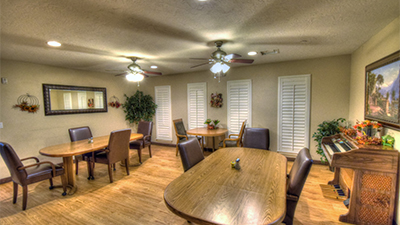
When I tour households through small assisted living homes, the first thing they comment on is not the care strategy or the activity calendar. They notice the smell of soup simmering on the stove. The household pictures on the mantle. The tv quietly playing in the background rather of blasting in a typical space. It feels like someone's home because it is.
In a small residential senior care home, you typically see 6 to 16 homeowners, not 80 or 120. Caretakers operate in the kitchen, aid with laundry, and sit at the very same dining table. The rhythm of the day feels closer to domesticity than to a program.
That environment matters more than a lot of families realize. Older grownups who have already given up driving, possibly lost buddies or a spouse, and are managing health modifications are being asked to adapt yet once again. A homelike environment softens that shift. Homeowners can unwind into a place that acts like a home rather of a facility.
I have seen people who hardly left their spaces in large assisted living communities come to life in a smaller setting: sitting at the kitchen area island peeling apples, chatting with caregivers, or joining a next-door neighbor on the patio. Exact same person, very same diagnosis, various environment.
Why size directly affects quality of care
The size of a senior care setting is not just cosmetic. It changes what is possible.
In a small assisted living home, care staff usually know every resident's regimens by heart: how they like their coffee, which t-shirt they prefer on Sundays, whether they tend to wander at 3 a.m. That depth of familiarity is tough to build when staff are responsible for a long hallway of apartments.

To comprehend the trade-offs, it assists to look at a few crucial distinctions in between bigger communities and smaller homes.
-
Staffing patterns and continuity
In big structures, staffing frequently works by zones or corridors. A caretaker might be responsible for 12 to 20 locals on a shift, in some cases more. Turnover can be high, which suggests citizens continuously meet new faces. In a small home with 6 to 10 locals, a caretaker's project might cover the whole house. Ratios differ, however it is common to see one caretaker for 3 to 5 residents throughout the day in much better small homes, and lower in the evening. This means more time per individual and quicker response to needs. -
Supervision and safety
Households often worry about safety, specifically with memory concerns. In a big assisted living setting, a resident can walk a far away from their space to common areas, and staff may not see immediately if something is incorrect. In a smaller home, common areas and bedrooms are better together. Caretakers can see and hear more simply by being present in the living space. This does not change proper fall-prevention or secure exits when dementia is involved, however it provides an integrated layer of natural oversight. -
Flexibility of routines
Big neighborhoods frequently rely on schedules for effectiveness: set meal times, shower days, group activities at set hours. Some residents enjoy the structure, however others find it stiff. In a small senior care home, it is simpler to bend around the individual. If someone chooses a late breakfast or a peaceful bath in the afternoon, there is less administration to browse. Personnel can state, "Sure, let's do that," rather of, "We will see if we can fit you onto the schedule." -
Staff relationships and accountability
In small settings, everybody sees everything. If a resident has a bad appetite for 2 days, the caregiver, the nurse, and frequently the owner or administrator will observe and speak about it. There is less room for somebody to "slip through the fractures." I have seen small homes determine urinary tract infections, medication adverse effects, and mood changes earlier merely because staff regularly see the exact same couple of individuals in close quarters.
None of this indicates a huge assisted living neighborhood immediately provides poor senior care. Some are outstanding, with strong staffing and thoughtful programs. Size simply sets the stage. It shapes how care is delivered and how easily staff can maintain genuine, individualized attention.
Emotional safety: being known, not just cared for
The scientific side of elderly care is just half the photo. Psychological security matters just as much, especially for individuals dealing with loss of independence.
In a small home, residents generally learn each other's names within days. They see the exact same employee day after day. They see when someone is missing out on from breakfast and ask about them. There is a kind of regular intimacy: the caretaker who knows exactly when to bring the cardigan, or the fellow resident who remembers someone's preferred dessert.
I keep in mind one female, Margaret, who moved into a small home after two hard months in a much bigger assisted living facility. In the bigger setting, she spent most of her time in her room. She told her daughter, "I feel like I remain in a hotel where I do not know anybody." In the small home, the manager welcomed her at the door, assisted her hang household images, and sat with her at the table that initially evening. Within a week, she and another resident were viewing old musicals together every afternoon.
Nothing about her care strategy altered in a technical sense. Very same medications, exact same medical diagnosis, very same walker. The difference was easy: she felt known.
When older grownups feel understood, three things tend to follow. First, they take part more. They are most likely to come to the table, join discussions, or choose a walk in the backyard. Second, they communicate signs earlier since they feel somebody is truly listening. Third, behavior concerns connected to stress and anxiety or confusion frequently alleviate, specifically in dementia, since the environment feels foreseeable and supportive.
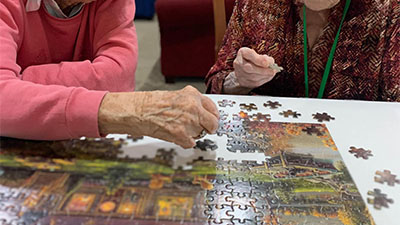
Large structures can absolutely create pockets of this type of belonging. Some do it well. Small homes, by their very nature, begin closer to that goal.
How smaller homes manage altering care needs
Families often worry that a small senior care home will not have the ability to handle increasing needs, specifically for dementia, mobility problems, or intricate medical conditions. This is a reasonable issue, and it does not have a single answer, since policies and models differ by region.
Many residential assisted living homes are certified to provide assist with all the typical activities of daily living: bathing, dressing, toileting, transferring, and medication administration or management. Some also specialize in memory care, with experienced personnel and secure environments for those with Alzheimer's or other dementias. A subset works carefully with checking out hospice agencies to support homeowners at the end of life, which permits many people to prevent another disruptive move.
Where small homes can have a hard time is with extremely technical medical requirements: ventilators, regular IV medications, or complex wound care that needs a nurse on-site for long blocks of time. In those cases, a skilled nursing facility or specific medical setting may be much safer and more appropriate.
The useful concern for households is not "Can a small home manage everything?" however "Can this specific home manage what my loved one needs now, and reasonably manage what we expect over the next year or more?" Well-run homes will be honest about their limits. If a provider assures they can handle any level of care no matter what, without ever requiring to transfer someone, that is an alerting indication more than a reassurance.
It is likewise crucial to ask how the home coordinates with outdoors healthcare providers. Excellent homes maintain close communication with medical care physicians, home health, therapy providers, and hospice teams. They are utilized to scheduling mobile lab draws, organizing transportation to visits, and keeping track of for changes that may indicate infection, medication issues, or pain.
The special role of respite care in small homes
Respite care can be a lifeline for family caregivers who are reaching their limitation. It describes short-term stays, usually from a couple of days as much as a few weeks, where the older adult relocations into an assisted living or senior care setting momentarily. This provides the primary caretaker an opportunity to rest, travel, or attend to other responsibilities.
Small residential care homes are frequently ideal locations for respite care, particularly for someone who has actually never ever lived in any type of senior neighborhood before. Moving temporarily into a large assisted living structure with long hallways and dozens of unfamiliar faces can be frustrating. A smaller home feels closer to what the individual already knows.
There is likewise a useful benefit. Staff in a small home can typically accustom a respite visitor quicker, due to the fact that there are fewer citizens to discover and fewer routines to handle. I have seen households use a a couple of week respite stay in a small home as a type of "test drive." The older adult gets a feel for shared living, the family sees how personnel engage with them, and both sides can decide whether a longer-term arrangement feels right.
For caregivers in your home, respite in a small setting likewise offers peace of mind. They understand their loved one is not lost in the shuffle which any concern is more likely to be discovered promptly.
Trade-offs: when bigger assisted living communities make sense
Smaller is not automatically better for every single individual or every circumstance. Large assisted living communities provide some advantages that deserve calling clearly.
They often have more formal programming: numerous daily activities, on-site health clubs, chapels, beauty salons, and transportation for group getaways. Extroverted citizens, or those still rather independent, might flourish in that environment. Someone who likes large-group bingo, organized workout classes, and a dining room bustling with conversation may discover a large community more stimulating.
Big structures likewise sometimes have on-site medical centers, treatment fitness centers, or drug store services. For specific complicated conditions, or when regular rehab is required, this can be convenient. Prices can often be more foreseeable as well, with standardized bundles and corporate policies.
Financially, there is no universal guideline. Some small homes are more cost effective than big communities, particularly in markets where real estate expenses are lower and overhead is modest. Others are quite expensive, particularly if they preserve very low staff-to-resident ratios. Families require to compare not simply the base rate but also the care charges, medication fees, and add-ons.
Lastly, some older grownups simply prefer the sensation of a bigger, busier location. They like having multiple dining-room, formal occasions, or the sense of living in a "community" rather than a single home. Personality and preference matter as much as diagnosis.
What "homelike" actually means in practice
The word "homelike" appears in almost every senior care sales brochure. In a smaller residential home, it needs to be more than marketing language. It needs to be visible in the small, daily details.
Meals, for instance, are typically prepared in the kitchen where citizens can see and smell what is happening. Breakfast might not be a set plated dish but a discussion: "Do you seem like oatmeal or eggs today?" Citizens may assist set the table or fold napkins. Even if somebody does not actively participate, merely watching the natural circulation of a home can be grounding.
Bedrooms feel like genuine rooms, not hotel systems. There is typically more versatility about bringing furniture from home, hanging art, or reorganizing things. When somebody wakes puzzled in the evening, they are only a few actions from a caregiver's bedroom or personnel office.
Noise levels are different too. Rather than overhead paging systems or large tvs in every common location, you hear the sounds of a regular home: water running, a radio in the kitchen area, 2 locals talking near the window. For people with dementia or sensory sensitivity, this calmer environment can minimize agitation and overwhelm.
Families also tend to incorporate in a different way. In a small home, there is typically no requirement to arrange visits around fancy sign-in systems or navigate a substantial parking area. Family members stroll in, greet staff by first name, and frequently wind up sharing a cup of coffee at the table. Holidays can seem like extended household events, with adult children, grandchildren, and staff all weaving together.
Questions to ask when touring a small senior care home
Choosing a senior care setting is not about finding perfection. It is about matching a genuine person, with particular requirements and preferences, to a genuine place with specific strengths and limitations. To make that match, households need useful, pointed questions.
Here is an easy checklist to bring when you tour a small assisted living or residential care home:
- What is the common staff-to-resident ratio throughout days, nights, and nights, and how knowledgeable are the caregivers?
- Exactly which care tasks are included in the base rate, and what costs extra if my loved one's needs increase?
- How do you deal with medical issues after hours, and who chooses when to send somebody to the hospital?
- How do you integrate brand-new residents emotionally, especially if they are shy, distressed, or coping with dementia?
- What sort of respite care stays do you offer, and just how much notice do you require to accept a short-term guest?
Listen not just to the responses, however to how personnel respond. Do they speak in specifics or in generalities? Are they comfy acknowledging limitations? Do you see caretakers communicating with locals in genuine time, and if so, does it feel warm and genuine or hurried and task-focused?
Trust your observations as much as the glossy products. Notification smells, sounds, body movement, and basic things like whether call lights, if present, are ignored or answered quickly.
When staying home is no longer working
A quiet truth in elderly care is that the majority of people wish to remain at home, however not everyone can do so safely. Households typically wait up until a crisis to consider assisted living, by which time options narrow. Checking out alternatives early, specifically smaller homes, can minimize that pressure.
For some older grownups, the transition to a small senior care home can feel less like "going into a center" and more like relocating to a different family household where aid is merely built in. That frame of mind shift matters. It honors the person as more than a set of senior living care tasks and acknowledges their requirement for belonging, familiarity, and dignity.
Respite care is a gentle way to begin that expedition. A week in a small home, framed as a brief stay while the family caregiver rests or takes a trip, provides everyone genuine details about how the older adult reacts to shared living. Sometimes, the person surprises the household by stating they feel safer or less lonely. Sometimes, it verifies that home with extra support stays the much better choice for now.
Either method, the choice is made with experience, not just speculation.
The heart of the matter: home as a feeling, not an address
Assisted living, senior care, and respite care are technical terms, but under them sits an easy human concern: "Where will I still feel like myself?" For lots of older grownups, especially those who discover big, institutional environments daunting, the answer lies in smaller residential homes.
These homes can not replace the history and intimacy of someone's initial house. They can, however, provide something simply as important in this stage of life: a location where regimens feel familiar, staff feel like extended family, and the scale of life matches what an older body and mind can conveniently navigate.
When households step into a small assisted living home and state, often with some surprise, "This actually seems like a home," they are pointing to the genuine worth of these environments. Not chandeliers or grand lobbies, but a pot on the stove, a well-worn recliner, a caregiver leaning in to hear a story they have most likely heard 3 times before and still treat as new.
That sensation is challenging to quantify on a contrast chart. Yet for the older grownup who has actually given up a lot currently, it can make all the difference in between simply getting care and really living somewhere that feels like home.
BeeHive Homes of Lamesa TX provides assisted living care
BeeHive Homes of Lamesa TX provides memory care services
BeeHive Homes of Lamesa TX provides respite care services
BeeHive Homes of Lamesa TX supports assistance with bathing and grooming
BeeHive Homes of Lamesa TX offers private bedrooms with private bathrooms
BeeHive Homes of Lamesa TX provides medication monitoring and documentation
BeeHive Homes of Lamesa TX serves dietitian-approved meals
BeeHive Homes of Lamesa TX provides housekeeping services
BeeHive Homes of Lamesa TX provides laundry services
BeeHive Homes of Lamesa TX offers community dining and social engagement activities
BeeHive Homes of Lamesa TX features life enrichment activities
BeeHive Homes of Lamesa TX supports personal care assistance during meals and daily routines
BeeHive Homes of Lamesa TX promotes frequent physical and mental exercise opportunities
BeeHive Homes of Lamesa TX provides a home-like residential environment
BeeHive Homes of Lamesa TX creates customized care plans as residents’ needs change
BeeHive Homes of Lamesa TX assesses individual resident care needs
BeeHive Homes of Lamesa TX accepts private pay and long-term care insurance
BeeHive Homes of Lamesa TX assists qualified veterans with Aid and Attendance benefits
BeeHive Homes of Lamesa TX encourages meaningful resident-to-staff relationships
BeeHive Homes of Lamesa TX delivers compassionate, attentive senior care focused on dignity and comfort
BeeHive Homes of Lamesa TX has a phone number of (806) 452-5883
BeeHive Homes of Lamesa TX has an address of 101 N 27th St, Lamesa, TX 79331
BeeHive Homes of Lamesa TX has a website https://beehivehomes.com/locations/lamesa/
BeeHive Homes of Lamesa TX has Google Maps listing https://maps.app.goo.gl/ta6AThYBMuuujtqr7
BeeHive Homes of Lamesa TX has Facebook page https://www.facebook.com/BeeHiveHomesLamesa
BeeHive Homes of Lamesa has an YouTube page https://www.youtube.com/@WelcomeHomeBeeHiveHomes
BeeHive Homes of Lamesa TX won Top Assisted Living Homes 2025
BeeHive Homes of Lamesa TX earned Best Customer Service Award 2024
BeeHive Homes of Lamesa TX placed 1st for Senior Living Communities 2025
People Also Ask about BeeHive Homes of Lamesa TX
What is BeeHive Homes of Lamesa Living monthly room rate?
The rate depends on the level of care that is needed. We do an initial evaluation for each potential resident to determine the level of care needed. The monthly rate is based on this evaluation. There are no hidden costs or fees
Can residents stay in BeeHive Homes until the end of their life?
Usually yes. There are exceptions, such as when there are safety issues with the resident, or they need 24 hour skilled nursing services
Do we have a nurse on staff?
No, but each BeeHive Home has a consulting Nurse available 24 – 7. if nursing services are needed, a doctor can order home health to come into the home
What are BeeHive Homes’ visiting hours?
Visiting hours are adjusted to accommodate the families and the resident’s needs… just not too early or too late
Do we have couple’s rooms available?
Yes, each home has rooms designed to accommodate couples. Please ask about the availability of these rooms
Where is BeeHive Homes of Lamesa TX located?
BeeHive Homes of Lamesa is conveniently located at 101 N 27th St, Lamesa, TX 79331. You can easily find directions on Google Maps or call at (806) 452-5883 Monday through Sunday 9:00am to 5:00pm
How can I contact BeeHive Homes of Lamesa TX?
You can contact BeeHive Homes of Lamesa by phone at: (806) 452-5883, visit their website at https://beehivehomes.com/locations/lamesa/, or connect on social media via Facebook or YouTube
You might take a short drive to the Dal Paso Museum. The Dal Paso Museum offers a calm gallery environment ideal for assisted living and memory care residents during senior care and respite care outings.